Research

FIR Lab focuses on embodied intelligence: embodied foundation models and learning methods that let robots understand the physical world and carry out complex manipulation reliably in real environments.

Vision

For robots to work in factories, labs and everyday life, isolated skills are not enough. They need general capabilities: understanding tasks, predicting the physical consequences of their actions, and continuing to learn as conditions change. Our central question is: How can robots understand the physical world and turn that understanding into reliable, generalizable manipulation skills? Embodied foundation models sit at the core of our work, inside a loop that links models, data and deployment: models produce actions, real-world execution produces data, and that data improves the models in turn.

Research Areas

01

Embodied Foundation Models (VLA / WAM)

Vision-language-action and world-action models that map vision, language and robot state directly to actions, and reason and plan over long-horizon tasks.

VLA WAM Embodied Reasoning
02

World Models & Physical Understanding

Learning how the world changes under robot actions, to predict outcomes, evaluate policies and generate training data.

World Models Outcome Prediction Generative Simulation
03

Robot Learning & Control

Learning manipulation skills from demonstrations, teleoperation and egocentric video; shared autonomy, failure recovery and contact-rich manipulation, validated on real robots.

Imitation Learning Shared Autonomy Tactile Manipulation
04

Data, Simulation & Real-world Deployment

Closed-loop real and synthetic data, simulation for evaluation, and the robot hardware that brings research to real tasks.
Data Flywheel Simulation & Synthetic Data Sim-to-Real

Selected Work

All publications >
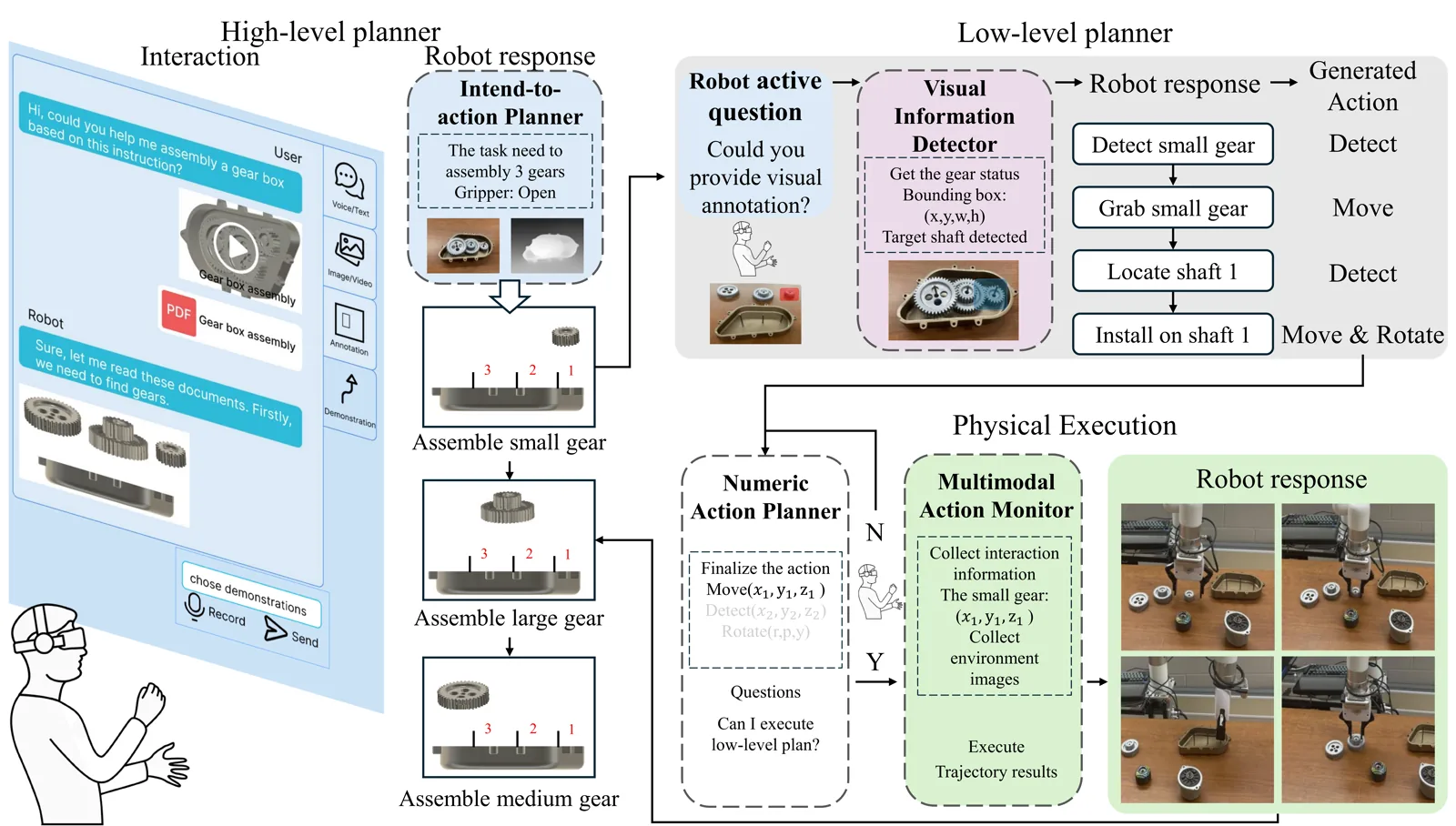
Human–VLA interaction framework
VLAbot · RCIM 2026

Human–VLA interaction framework

People and vision-language-action models collaborating on long-horizon assembly.
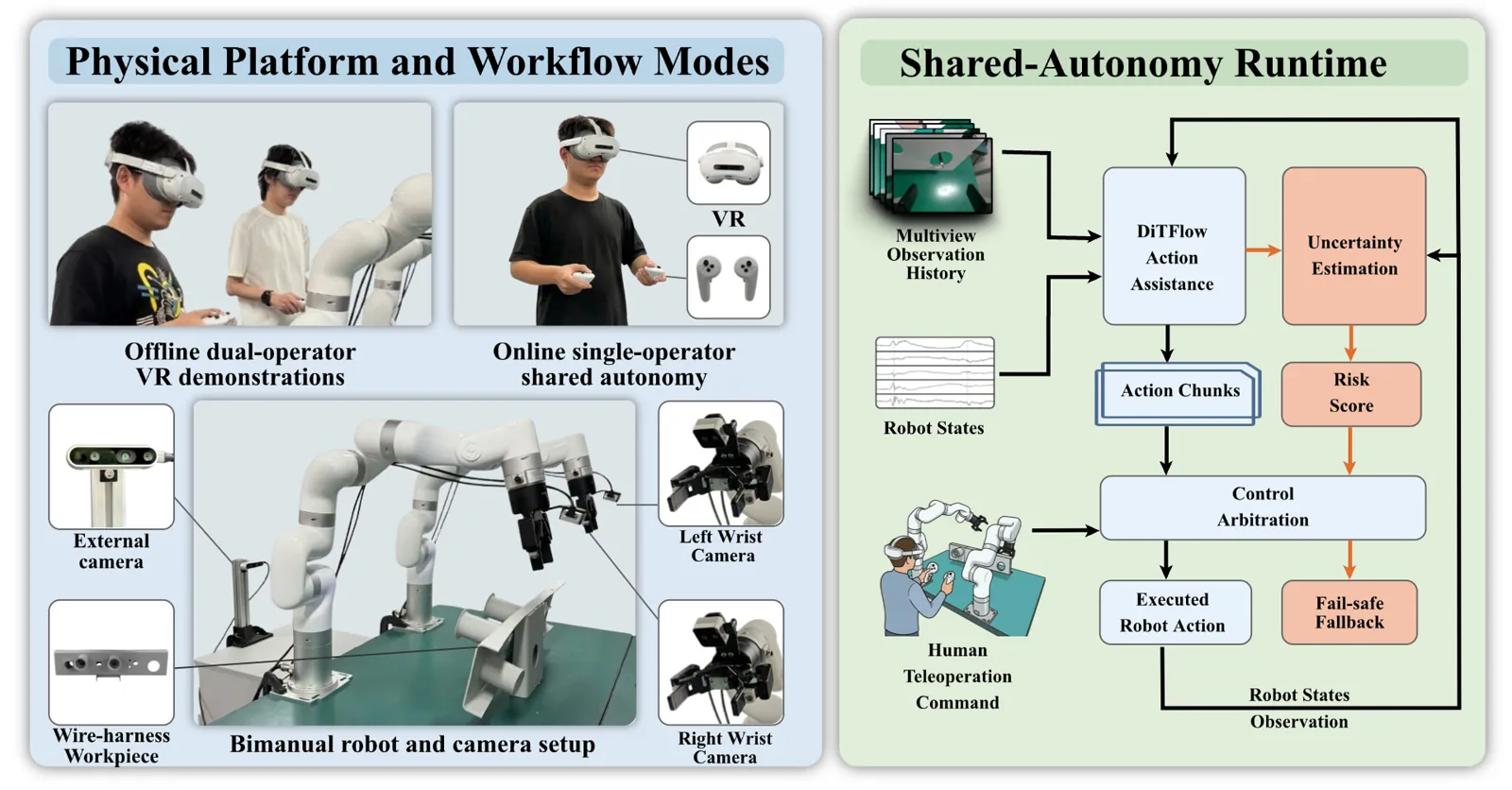
Risk-guided bimanual shared autonomy
CopilotTele · IEEE CASE 2026

Risk-guided bimanual shared autonomy

The model acts by default and hands control back to the operator when risk rises.
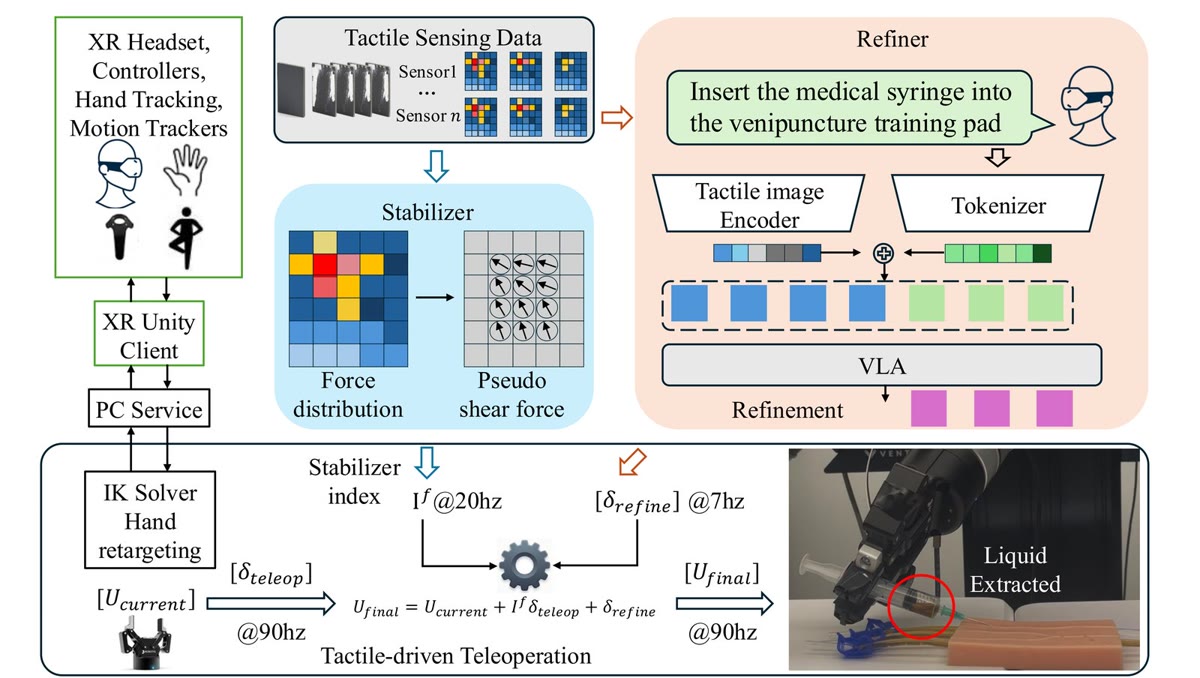
Tactile-driven teleoperation and refinement
XRoboToolKit-T · 2026

Tactile-driven teleoperation and refinement

Tactile sensing plus VLA action refinement for contact-rich manipulation.
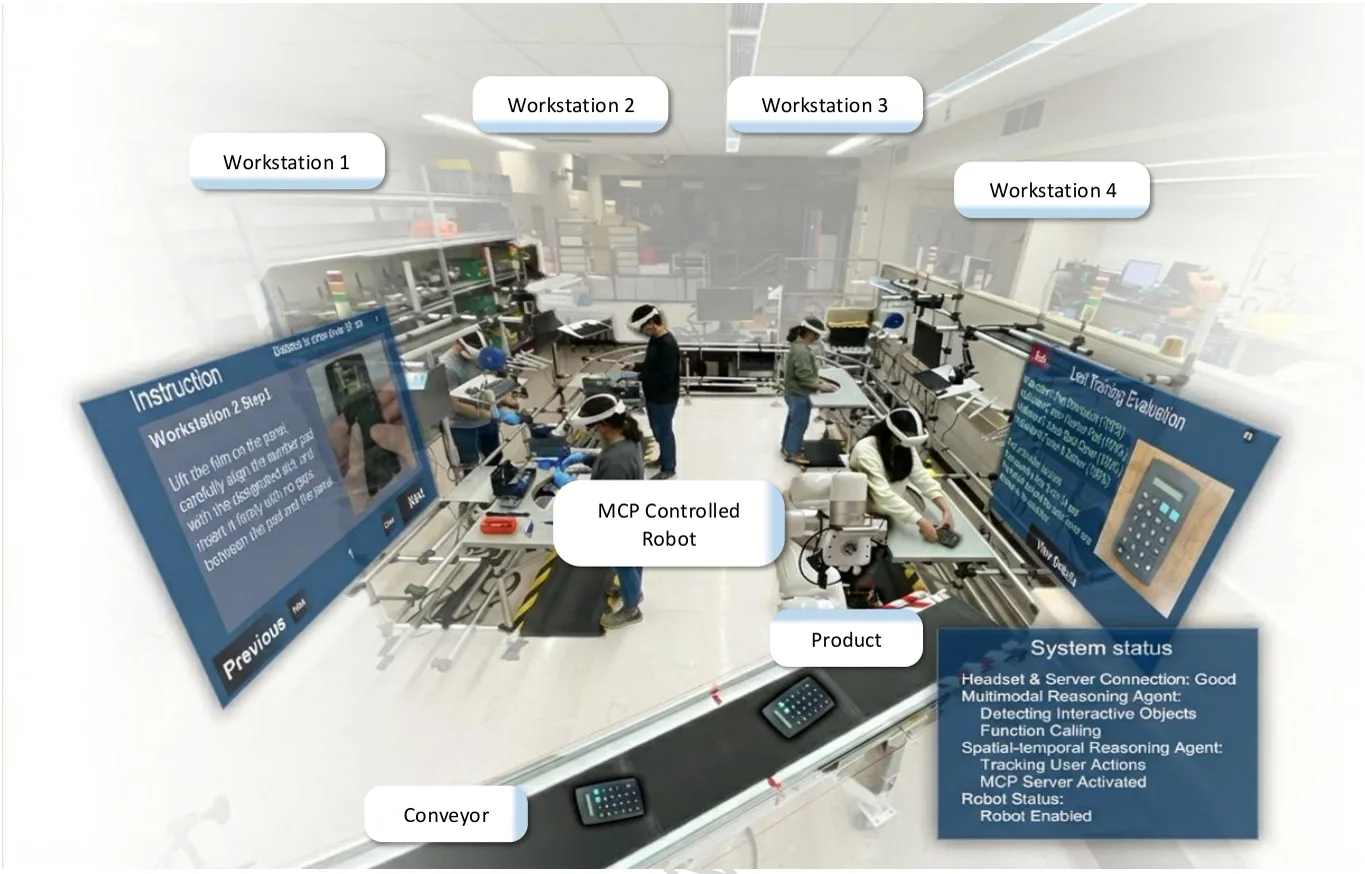
Context-aware assembly co-worker
AssemblyMate · npj Adv. Manuf. 2026

Context-aware assembly co-worker

Multimodal and spatial-temporal reasoning agents coordinating a robot through assembly.
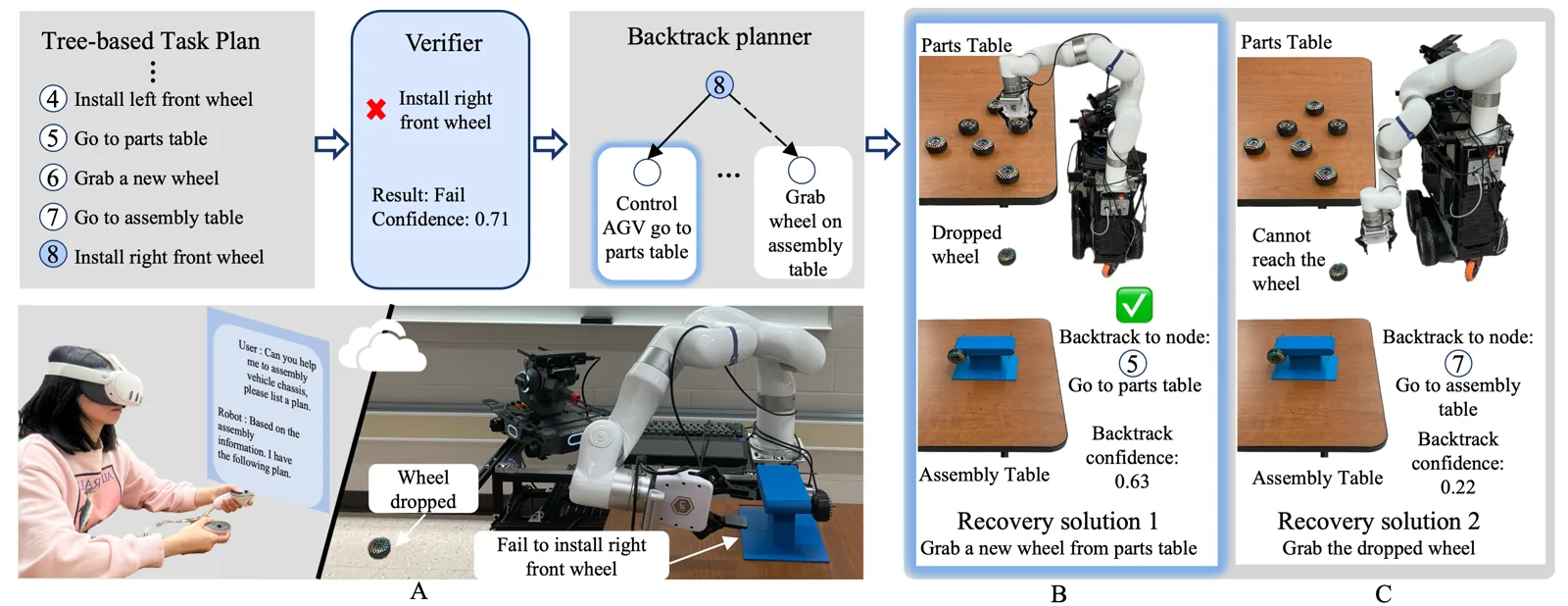
Hierarchical long-horizon manipulation
HALO · 2025

Hierarchical long-horizon manipulation

Detecting execution failures in long-horizon tasks and generating recovery strategies.
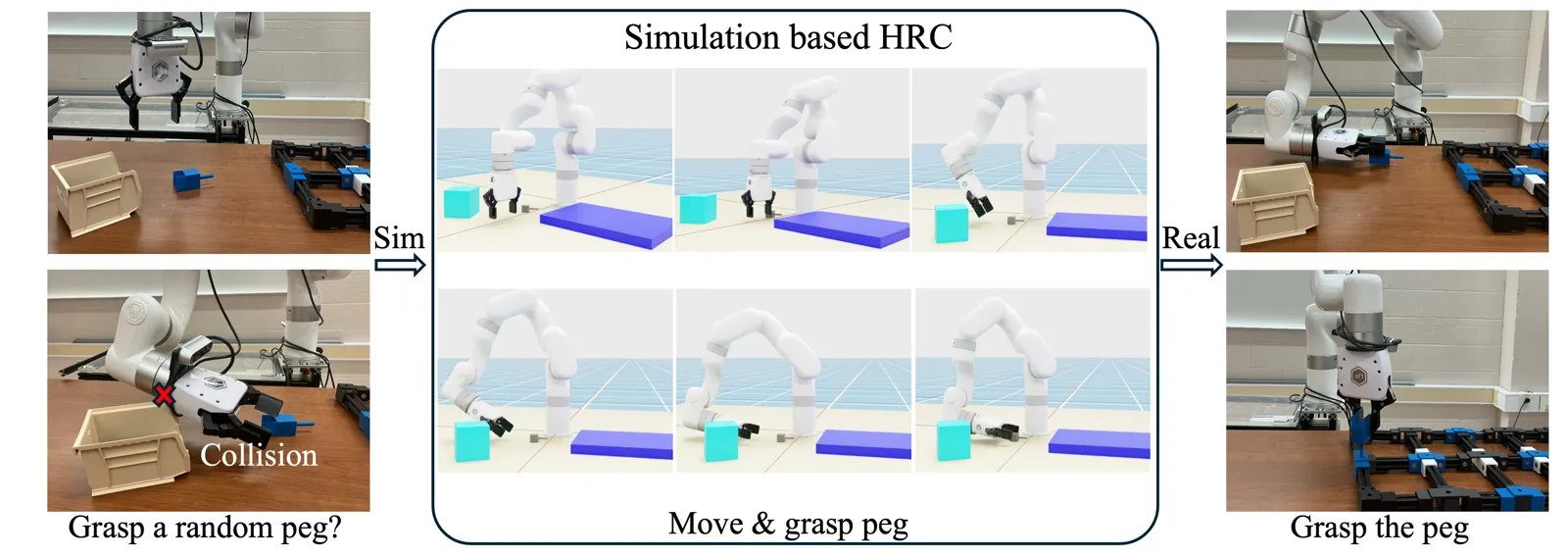
Policy evaluation in simulation
RoPESim · IEEE CASE 2025

Policy evaluation in simulation

Evaluating manipulation policies in physics simulation before real deployment.

Facilities

FIR Lab is part of the Centre for Fundamental and Frontier Sciences, HKISI-CAS, with:

  • Robot platforms: Collaborative robot arms, dexterous hands and mobile manipulation platforms.
  • Data collection: Teleoperation and egocentric data collection systems.
  • Simulation: Simulation and synthetic data environments for embodied AI.
  • Compute: GPU resources for training and deploying embodied foundation models.